How much is my Pokemon card worth? A practical guide to calculating its value and protecting your collection
Introduction: How much is my Pokemon card worth and why does its price change so much?
If you've ever wondered how much your Pokémon card is worth, you're not alone. A card's value can fluctuate significantly from week to week and, in some cases, change dramatically due to a new expansion, a major tournament, or a trend among collectors. Understanding what determines the price helps you make better decisions: selling at the right time, buying with confidence, or protecting your collection as it deserves.
In this guide, you'll find a clear and practical way to evaluate your cards, including the factors that most influence the market and a quick checklist to help you identify a hidden gem. And if you want to expand your collection or build your next deck, remember that you can find Pokémon and other TCG products at tcgshops.com.
The key factors that determine how much my Pokemon card is worth
To estimate the true value of a card, it's not enough to just look at the Pokémon's name. These are the variables that carry the most weight:
1) Rarity and card type
Not all rarities behave the same. Generally, the most sought-after cards tend to be:
- Rare Illustration and Special Rare Illustration
- Ultra Rare, Full Art and Secret Rare
- Hard-to-obtain promotional cards
- Old cards from classic sets, especially if they are first editions or limited versions
In addition, some competitive cards may rise in price due to player demand, even if they are not the most visually appealing.
2) State: the factor that can add or subtract the most money
When someone asks how much their Pokémon card is worth, the condition is usually the difference between a common card and a very valuable one. The usual categories range from Near Mint to Played or Damaged. Details that lower the price:
- White corners or wear on edges
- Surface scratches on the holo
- Marks, folds or pressure
- Poor centering (very relevant in modern letters)
Quick tip: Check the card in good light and, if possible, store your best pieces in an inner sleeve and hard protector.
3) Edition, language and print run
The edition matters. Some printings are rarer, and certain variants (for example, event promos) may be in high demand. Language also plays a role: depending on the market, certain versions may be priced differently. The most important thing is to identify exactly which version you have, because two visually similar cards can have very different prices.
4) Demand: collecting and competitive gaming
The value of a card increases when many people want it at the same time. This demand usually comes from two sides:
- Collectors: looking for illustrations, popular Pokémon, complete sets, or iconic cards.
- Players: need copies for competitive decks, especially if the card defines a strategy.
That's why sometimes a "pretty" menu and a "useful" menu have different prices.
How to correctly identify your letter before appraising it
An accurate estimate starts with precisely identifying your card. Before thinking about how much my Pokémon card is worth, check:
- Pokémon name and card number
- Set or expansion (usually appears at the bottom)
- Rarity symbol and whether it is holo, reverse holo or normal
- If it's a promotion (it usually indicates this clearly)
With that information, you can accurately compare it to the market. This helps you avoid the most common mistake: confusing a regular version with a rare version, or vice versa.
Quick checklist to find out if your card might be worth more than normal
If you answer yes to several of these questions, it's worth reviewing them in more detail:
- Is it a high rarity card or a special illustration?
- Does it feature a very popular Pokémon or an illustration by a recognizable artist?
- Is it in Near Mint condition and well centered?
- Is it a promo or a hard-to-get card?
- Is it an important card in the current metagame?
Even within the same set, condition and demand can cause two "identical" cards to sell for very different prices.
Tips for preserving the value of your collection
If your goal is to maintain or increase value, protection is part of the price. Some best practices:
- Use quality sleeves and hard protectors for featured cards
- Store your cards in a dry place, out of direct sunlight and at a stable temperature.
- Avoid stacking unsleeved cards or transporting them loose.
- Organize by set or rarity to locate them without over-handling them
This care is especially important if you decide to sell or trade in the future.
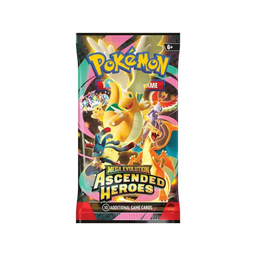
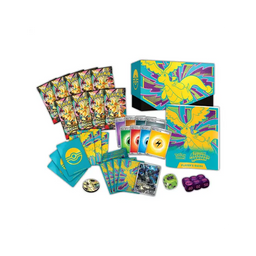
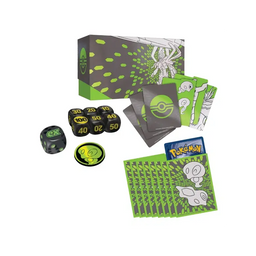
Find envelopes, boxes, and accessories for your collection at tcgshops.com
Part of the excitement of wondering how much your Pokémon card is worth is opening new products, improving your deck, and discovering cards that fit your playstyle. If you're looking to bolster your collection or start a new one, you'll find Pokémon products at tcgshops.com, along with options from Riftbound, One Piece, and Magic.
We recommend visiting tcgshops.com and subscribing to our newsletter to stay informed about new arrivals and upcoming releases. This way, you can prepare for your store openings in advance and not miss out on the most sought-after products.
Conclusion
Answering the question "How much is my Pokémon card worth?" is easier when you know what to look for: rarity, condition, edition, and demand. With proper identification and good storage practices, your collection can maintain its value and bring you great satisfaction as a player or collector. Stay tuned for new arrivals and visit tcgshops.com to discover products and accessories that will help you continue to grow your collection.