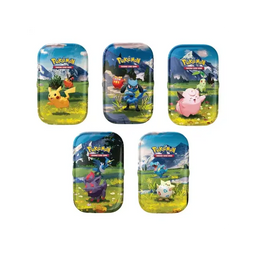
Pokemon Card Deck Guide: How to Build a Consistent Deck for Play and Collecting
Build the Right Pokemon Card Deck: A Friendly Guide for Players and Collectors
Whether you are returning to the Pokémon Trading Card Game after a break or building your very first pokemon card deck, the best results come from a clear plan. A well-built deck feels consistent, sets up quickly, and gives you strong options on every turn. For collectors, deck building is also a great way to enjoy your cards beyond the binder, especially when you create a theme around a favorite Pokémon, region, or strategy.
In this guide, we will walk through what makes a strong pokemon card deck, the core parts every list needs, and how to choose an approach that matches your playstyle. If you want to pick up deck-building staples, accessories, and sealed products to upgrade your collection, keep an eye on tcgshops.com for availability and newsletter updates.
Key features of a strong pokemon card deck
A great deck is not defined by one expensive card. It is built on fundamentals that help you draw the right cards, find your key Pokémon, and respond to different matchups. Here are the features most successful decks share:
- Consistency: multiple ways to draw cards and search your deck
- A clear win condition: a plan to take Prize cards efficiently
- Reliable Energy access: enough Energy plus methods to attach or accelerate it
- Balanced counts: not too many situational cards that clog your hand
- Matchup flexibility: tech choices that help versus common strategies
Main details: what goes into a pokemon card deck
In the Pokémon TCG, most formats use a 60-card deck with specific rules about how many copies you can include. That structure makes deck building feel like a puzzle: every slot must earn its place. While each archetype is different, most decks can be broken into three key categories: Pokémon, Trainers, and Energy.
Pokémon: choose a focused strategy
Start by deciding how your deck will win. Some decks aim to power up one main attacker quickly and keep swinging. Others rotate attackers, spread damage, or use disruptive effects to slow the opponent down. Whatever your plan is, avoid mixing too many unrelated lines. Focus on one primary strategy with a small number of supporting Pokémon.
A helpful approach is to pick:
- 1 to 2 main attackers you want to use most turns
- Support Pokémon that help with draw, search, switching, or Energy acceleration
- Optional secondary attackers to cover weaknesses or different Prize trades
For collectors who enjoy theme decks, you can still keep focus by choosing a shared typing, a region theme, or a signature mechanic and building your Pokémon lines around it.
Trainers: the engine of your deck
If Pokémon are the stars, Trainers are the engine. Newer players often underestimate this. In many competitive lists, Trainers make up the largest portion of the deck because they improve consistency and let you see more cards each game.
Most Trainer packages include:
- Draw Supporters and draw Items to keep your hand moving
- Search cards to find Pokémon or key pieces when you need them
- Switching options so you can reset attackers or bring up the right Pokémon
- Stadiums and utility cards to improve your board or disrupt the opponent
When building a pokemon card deck, think of Trainers as your plan for the first three turns. Ask yourself: can I reliably get my main attacker set up by turn two or three? If not, you may need more search and draw rather than adding more attackers.
Energy: enough to attack, not enough to flood
Energy counts vary by strategy. Some decks run a higher Energy count to attack reliably without needing extra support. Others run fewer Energy because they have strong draw engines or Energy acceleration effects.
As a general rule, include enough Energy to attack on time, then add consistency cards that help you find it. If you frequently open hands with too much Energy and not enough action, reduce the count and increase search or draw. If you miss attacks because you cannot find Energy, increase the count or add ways to fetch it.
Deck building tips for better consistency
These practical steps can quickly improve your results, even if you are building on a budget:
- Use more copies of your best cards: consistency usually beats variety
- Keep your lines tight: avoid too many one-of cards unless they are searchable and essential
- Test your opening hand: shuffle and draw 7 multiple times to see how often you can set up
- Track common problems: getting stuck, missing Energy, or failing to find an evolution line
- Upgrade gradually: replace the weakest cards first as you acquire better staples
For collectors: turning favorites into a playable deck
Collectors often ask how to build a pokemon card deck around a favorite Pokémon without sacrificing too much playability. The best method is to start with a functional core of Trainers and a simple Energy plan, then use your favorite cards as the centerpiece. This lets you enjoy your collection while still playing real games with friends or at local events.
If you like keeping cards in top condition, consider using sleeves and storage solutions so your deck stays clean between sessions. You can find TCG accessories and sealed products for Pokémon and more at tcgshops.com, and subscribing to the newsletter is a great way to hear when key items are available for purchase.
Conclusion
Building the right pokemon card deck is one of the most rewarding parts of the game. With a focused strategy, a strong Trainer engine, and an Energy count that supports your plan, you will see more consistent starts and enjoy closer, more exciting matches. If you are ready to upgrade your deck or start a new project, check tcgshops.com and subscribe to the newsletter to stay informed on upcoming availability of Pokémon TCG products and essentials.