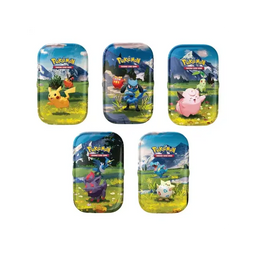
Pokemon TCG Fighting-type deck: a guide to building a powerful and competitive deck
Introduction: Power and control with a Fighting-type deck in the Pokemon TCG
If you enjoy attacking quickly, applying pressure from the first turn, and winning games with favorable trades, a Fighting-type Pokémon TCG deck might be exactly what you're looking for. The Fighting type has earned a special place among competitive players and collectors for its straightforward style, its ability to punish certain popular archetypes, and its excellent synergy with support cards that speed up the pace of the game.
In this guide, you'll discover what makes a Fighting deck appealing, which cards typically form its core, how to play it, and what to look for when buying or improving your deck. And when you're ready to build or update your deck, you can find products and new releases at tcgshops.com , your online store for Pokémon, Riftbound, One Piece, and Magic.
Why choose a Fighting-type Pokemon TCG deck
The Fighting type stands out for its easy-to-understand yet deep game plan: applying constant pressure, forcing awkward responses, and exploiting tempo. Generally speaking, Fighting decks typically offer:
- Energy efficient damage , ideal for taking prizes quickly.
- Consistent threats , with attackers that function well even without lengthy preparation.
- Flexible options , combining low-cost attackers with one or two finishers.
- Good access to tools and support cards that improve hand and table stability.
In addition, in many formats, the Fighting type often has interesting matchups against decks that rely on Pokémon with specific weaknesses or strategies that need several turns to stabilize.
How the game plan of a Fighting-type deck works
Although each list changes depending on the expansion and the metagame, most Fighting archetypes share a clear structure:
- Early game: establish bank, gather energy, and put an attacker ready to start exchanging prizes as soon as possible.
- Mid game: chain attackers, maintain the flow of resources (energies, changes, search cards) and control the rhythm with constant pressure.
- Late game: closing the game with a more powerful attacker or with a final favorable exchange that leaves the opponent without a response.
The key is consistency. A Pokémon TCG Fighting-type deck usually wins when it draws well, but especially when it maintains a stable pattern: attacking every turn, not running out of energy, and not wasting too much time searching for pieces.
Essential components that usually appear in a Fighting deck
For a Fighting deck to be solid, you typically need a balance between attackers, a draw engine, and search cards. This is what's most common in competitive lists:
- Main attackers: the core you want to see in every game. These are usually Pokémon that attack with low cost or scale well with the board state.
- Secondary attackers: options for different confrontations, finishing off or responding to specific threats.
- Consistency Engine: Supporter cards and/or abilities that help you draw, filter, and stabilize your hand.
- Search Pack: Cards that find Pokémon, Energy, and Trainers so your deck can function without relying on a perfect hand.
- Table mobility and control: changes, strings, tools and resources that prevent you from getting "stuck" with an unwanted active Pokémon.
- Energies: a base that allows you to attack without missing turns, with the correct balance between basic and special energies if your list uses them.
If you're new, a good tip is to start with a simple, consistent list, and then adjust it based on what you face most in your community or online gaming.
Practical tips to improve your Pokemon TCG Fighting-type deck
When a Fighting deck underperforms, the problem is almost always not the damage output, but the consistency. These adjustments often make a big difference:
- Reduce situational cards: if a card is only useful in a very specific case, consider replacing it with search or draw.
- Secure your first attacker: your goal is to attack as soon as possible. Check how many cards you have to find your ideal basic card and its energies.
- Manage your energy count carefully: too little energy will cause you to miss attacks; too much reduces the effectiveness of your steals. Adjust according to your average attack cost.
- It includes flexible responses: one or two cards that give you an exit against complicated boards often win games that seemed lost.
- Practice resource management: in Combat, wasting a change or a search can delay an entire turn, and that decides games.
For gamers and collectors: why it's also worth it
A Fighting deck isn't just a competitive option. For collectors, this type often includes cards highly sought after for their dynamic artwork and iconic evolutionary lines. Furthermore, building themed decks is an excellent way to enjoy your collection while playing with coherence and style.
If you're building multiple decks for friends or your local game store, a Fighting deck also works as a teaching deck: it teaches you to prioritize tempo, prize trades, and search sequences.
Availability and where to get your next upgrade
If you want to build or enhance your Pokémon TCG Fighting-type deck , the best way is to do so with genuine products and a player-focused inventory: booster packs, boxes, single cards, accessories, and more. At tcgshops.com, you can find new releases for the Pokémon TCG and other TCGs like Riftbound, One Piece, and Magic. We recommend checking the store and subscribing to the newsletter to be notified when this deck or key components become available for purchase.
Conclusion
A Pokémon TCG Fighting deck is a fantastic choice if you enjoy an aggressive, consistent, and high-stakes style. With a solid search base, a clear attack plan for each turn, and some adjustments based on your metagame, you can build a highly competitive and fun deck to collect. Visit tcgshops.com to discover products, upcoming restocks, and everything you need to take your Fighting deck to the next level.