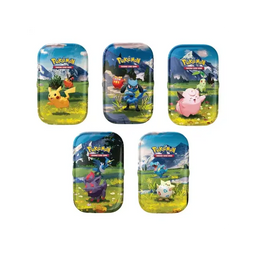
How to play Pokemon Trading Card Game: An easy guide to start playing and choosing your first products at tcgshops.com
Introduction: How to play the Pokemon Trading Card Game and get off to a good start
If you've ever wondered how to play the Pokémon Trading Card Game, you've come to the right place. The Pokémon Trading Card Game is easy to learn, highly strategic, and perfect for both new players and collectors looking to take their skills to real games. With a few basic concepts and the right product, you can go from opening booster packs to building a solid deck and enjoying fast-paced matches at home, at your local game store, or at events.
This guide explains the essentials to get started, highlighting the key features typically found in ideal learning products: ready-to-play decks, essential Trainer cards, ample energy, and accessories that streamline gameplay. And if you're looking for where to buy your next products, remember they'll be available at tcgshops.com, your online store for Pokémon, Riftbound, One Piece, and Magic: The Gathering TCGs.
The basics: the objective of the game and how to win
The main objective in the Pokémon TCG is to defeat your opponent's Pokémon and collect Prize Cards. Typically, each player sets six Prize Cards to start the game. Each time you defeat an opponent's Pokémon, you draw one or more Prize Cards, depending on the Pokémon's type. You win when you collect all your Prize Cards, or if your opponent cannot draw a card at the start of their turn, or if they have no Pokémon in play.
What's included in a deck and why it matters when learning
To understand how to play the Pokémon Trading Card Game, it's important to know the deck structure. A standard deck has 60 cards and is usually composed of:
- Pokemon: Your team to attack and evolve.
- Energy Cards: needed to pay for attacks.
- Coach Cards: the engine of the deck, they help to draw, search, retrieve cards and control the game.
Products designed for beginners typically stand out for offering a balanced and easy-to-play decklist, with enough energy and basic Trainer cards to make the deck work from the very first game. This saves you time and allows you to learn the rules without frustration.
Game preparation step by step
Before the first shift, follow this sequence:
- Shuffle your deck and offer to cut the opponent.
- Draw 7 cards.
- Choose a Basic Pokemon as your Active and place it face down.
- Place up to 5 Basic Pokemon on the Bench, also face down.
- Place 6 prize cards face down.
- Both players reveal their Active and Benched Pokemon; decide who goes first.
Helpful tip: If you draw a hand with no Basic Pokémon, reveal your hand, shuffle it into your deck, and draw 7 new cards. Your opponent draws an extra card each time this happens.
How a shift works: the quick guide you need
Each turn in the Pokémon TCG follows a specific order that you should memorize. This is essential for mastering how to play the Pokémon Trading Card Game.
- Draw: You draw 1 card at the start of your turn.
- Actions: You can bring down Basic Pokemon, evolve, attach 1 Energy per turn, play Trainers, use abilities, retreat, and more.
- Attack: You choose an attack from the Active Pokemon if it meets the Energy cost.
- End of turn: After attacking, your turn ends.
Key point for beginners: the starting player generally cannot attack on their first turn. This makes the first turn ideal for preparing the bank, searching for cards, and securing energy.
Pokemon cards: basics, evolutions and types
Pokémon can be Basic or Evolutions. An Evolution Pokémon is placed on top of its corresponding previous Pokémon. For example, a Stage 1 Pokémon evolves from its Basic form, and a Stage 2 Pokémon evolves from its Stage 1 form. You generally cannot evolve a Pokémon on the turn it is switched out, except under specific conditions.
There's also a significant difference between regular Pokémon and more powerful Pokémon, which tend to drop more prize cards when defeated. Learning to manage this risk-reward dynamic is part of growing as a player.
Trainers: the engine of the deck
If you want to improve quickly, focus on the Trainer cards. They are usually divided into:
- Supporters: strong effects, usually 1 per turn.
- Objects: can be played in quantity during the turn.
- Stadiums: they modify the field for both players.
- Pokemon Tools: These are equipped to a Pokemon to give it enhancements.
Ideal products for learning usually include a Trainer base that helps draw and search for cards, making the game smoother and teaching good decisions from the start.
Quick tips to get started building and improving
- Consistency first: prioritize cards that help you draw and search for your main Pokemon.
- Clear attack plan: choose 1 or 2 main attackers and support them with benching.
- Energy in the right measure: too much clogs your hand; too little holds you back.
- Practice sequences: learn the optimal order for playing cards, first search, then draw, then decide on the attack.
Conclusion: Ready to play and collect
Learning how to play the Pokémon Trading Card Game is easier when you have a clear set of rules, a well-structured turn, and a deck designed to work from the start. Whether you want casual games or are interested in competitive play, starting with balanced and well-designed products makes all the difference.
If you want to prepare for your next game or expand your collection, visit tcgshops.com and check out the latest releases for Pokémon, Riftbound, One Piece, and Magic. Subscribe to the newsletter to be notified when products are available for purchase and never miss an upcoming release.