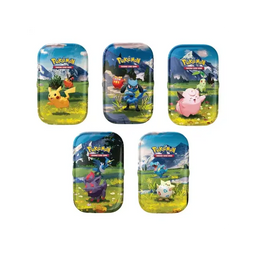
How much is the card worth? A practical guide to valuing your Pokémon, One Piece, Magic, and Riftbound cards
Introduction: How much the card is worth and why it matters to players and collectors
If you've ever wondered how much that card you just opened, traded, or found in your binder is worth, you're not alone. The question of a card's value is one of the most common in the world of TCGs, because a card's worth can change over time, with the metagame, and with collector demand. Whether you play Pokémon, One Piece, Magic, or are just starting to explore Riftbound, understanding what determines a card's price helps you make better decisions: when to sell, when to hold onto, when to upgrade a deck, and how to protect your collection.
At tcgshops.com, we're passionate about TCGs and know that value isn't just about money: it's also about tournament utility, nostalgia, rarity, and condition. Below you'll find a practical guide to estimating a card's value and what details to check before buying, selling, or trading.
What determines the value of the card?
The value of a card isn't determined by a single factor. It's usually the sum of several elements that combine differently depending on the game and edition. These are the most important:
- Rarity and print run: common cards are usually worth less, while secret, alternate arts, limited promos or low print runs tend to go up.
- Competitive demand: If a card becomes key in metagame decks, its price can rise rapidly. When it rotates out or is banned, it can drop.
- Popularity of the character or illustration: In Pokémon and One Piece, certain characters, special artworks, and alternate versions generate high collector demand.
- Edition and language: First edition, reprints, special sets, and language all play a role. Some cards are more sought after in certain markets.
- Condition: A card in Near Mint condition can be worth much more than the same card in Played condition. Small details change the price.
- Authenticity and protection: authentic cards, well stored with sleeves and top loaders, better maintain their value.
How to assess the condition to know how much the card is worth
Before calculating the card's value, check its condition in good light and, if possible, with a simple magnifying glass. In many cases, the condition is what most differentiates the price between two copies of the same card.
- Corners: look for creases, wear, or white tips.
- Edges: whitening or wear on the edges lowers the value.
- Surface: scratches, nail marks, stains or print lines.
- Centered: Especially in highly collectible cards, centering can affect appeal.
- Back: this is where the wear is most noticeable, and it is key to assessing.
Practical tip: If you think a card is valuable, immediately put it in a sleeve and then in a hard protector. This helps preserve its value in the long run.
Product details: the true value of a card in the TCG ecosystem
In a TCG, a card can have two types of value that constantly overlap. First, play value: cards used in competitive decks tend to move more because players need them now. Second, collector value: special art, full art cards, foil, event promos, and cards with low availability tend to remain valuable even if they aren't played.
In Pokémon, for example, special artwork and cards featuring popular characters tend to maintain demand. In One Piece, leaderboards, alternate versions, and key cards in the format can fluctuate depending on results and releases. In Magic, rotation, formats, and reprints have a significant impact, and some cards are valued for their use in Commander. Riftbound, as an emerging ecosystem, can exhibit rapid changes: what is difficult to obtain today may stabilize with new waves of releases, or increase in value if the player base grows.
Therefore, when you ask how much a card costs, it's helpful to also consider what you want it for. If it's for playing, it might be best to buy when there's more stock or reprints. If it's for collecting, the priority is usually condition and edition, as well as proper storage.
Common mistakes when estimating the value of a letter
- Comparing cards in different conditions: a Near Mint card should not be compared to a Played version.
- Do not check the exact edition: reprints and variants may look the same, but they are not.
- Ignore the variant: foil, reverse, alt art, promo and special versions change the price.
- Making impulsive decisions after a rise: the value may fluctuate; it is advisable to review the trend and utility.
How tcgshops.com helps you make better decisions
A smart way to determine a card's value is to regularly monitor the market and purchase from a reputable source. At tcgshops.com, you'll find products for Pokémon, Riftbound, One Piece, and Magic, perfect for opening booster packs, improving decks, or starting a collection with clear goals. If you're building a deck, it's also wise to plan your purchases around new releases, expansions, and format changes.
If the product or expansion you're looking for isn't yet available, we recommend visiting tcgshops.com and subscribing to our newsletter to be the first to know about new arrivals, restocks, and availability. This allows you to act quickly when popular cards or sets become available.
Conclusion
Understanding a card's value is a key skill for getting the most out of any TCG, whether you play competitively, collect for nostalgia, or are looking for special pieces. By checking rarity, demand, edition, and condition, you can better estimate value and protect your investment in sealed cards and products. If you want to stay up-to-date on releases and options for your collection, visit tcgshops.com and subscribe to the newsletter to be notified when the products you're looking for will be available.