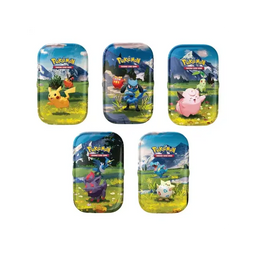
Pokémon Energy: A Complete Guide to Choosing the Perfect Energy for Your Deck and Collection
Introduction: Why Pokémon energies are key in every game
In the Pokémon Trading Card Game, Pokémon Energy is much more than just a resource: it's the engine that allows you to attack, retreat, activate abilities, and keep the game moving. Whether you're building your first deck or optimizing a competitive list, choosing the right Energy makes the difference between a smashing turn and a wasted one.
This guide explains how energies work, the different types available, and how to choose the best combination for your play style. If you want to improve your consistency and make better deckbuilding decisions, this article is for you. And if you're missing items to fine-tune your deck, you can find energies and related products at tcgshops.com when they become available.
Key features of Pokemon energies
Energy serves three main functions in the Pokémon TCG:
- They allow the use of attacks: most attacks require one or more energy symbols.
- They improve mobility: paying the withdrawal cost usually requires energy.
- They define the deck plan: your choice of energies conditions the speed, consistency, and responsiveness.
Furthermore, the way you manage your energy during the game directly influences your tempo control: charging a main attacker, preparing a second attacker on the bench, or conserving resources for a strong endgame.
Main types of Pokemon energy
In general terms, there are two categories that every player should know.
Basic Energy
Basic energy is the most common and the foundation of most decks. It's usually easy to include and search for using cards that "search for basic energy" in the deck. It's ideal for lists that prioritize stability and a straightforward plan, especially in single-type decks.
Typical advantages:
- High consistency in deck construction.
- No special conditions for use.
- Synchronize with many cards that accelerate energies.
Special Energy
Special energy often provides additional effects: it can grant more than one energy, reduce damage, help you retreat, change your type, or enable specific strategies. In return, it often has restrictions or can be more vulnerable to cards that interact with special energies.
Typical advantages:
- Accelerate offensive plans and combine with advanced strategies.
- It allows for fine-tuning to win specific matchups.
- Improve the efficiency of your shifts by "doing more with less".
How to choose Pokemon energies for your deck
There's no universal number, but there are clear criteria for getting it right. Before adding random energies, review these points:
1) Attack costs and game curve
If your main attacker needs few energy to attack, you can afford to play fewer energy cards or rely on search cards. If your plan requires high-cost attacks, energy consistency becomes a priority, either by increasing the energy count or using acceleration.
2) Acceleration and recovery
Many decks include ways to put additional energy into play or retrieve it from the discard pile. If your list already reliably accelerates energy, you can slightly reduce the total count. Otherwise, it's best to maintain a sufficient number so you don't run out of resources in the early turns.
3) One or more types
Monotype decks tend to be more stable: they benefit from basic energy and a simple base. Multicolored decks gain flexibility, but require a more careful energy base. In these cases, special energies or energy-fixing cards often help avoid awkward hands.
4) Alternative plan and supporting attackers
A good deck doesn't just have one attacker; it usually includes options for different scenarios. Make sure your energy distribution allows you to power up both your Plan A and Plan B. Nothing is more frustrating than having the perfect answer in hand but not being able to pay the cost.
Practical tips for players and collectors
Pokémon energies also matter outside of competitive play. Here are some helpful recommendations:
- Prioritize consistency: if you're torn between "more tricks" or "more stability", stability usually wins.
- Manage your energy at the table: decide when to load your bankroll and when to focus on an attacker.
- Organize your collection: separating basic energies by type and special energies by effect saves you time when building decks.
- Think about the metagame: some special energies shine when there are specific matchups or trends in tournaments.
For collectors, energies with special artwork or specific editions can be an attractive way to complete sets or enhance the deck's aesthetics. Even if your goal is to play, a good selection of energies elevates the presentation and makes your deck more personal.
Details that make a difference when buying energy
When you're looking for energy to play or collect, look at:
- Compatibility with your strategy: not all special energies fit into all decks.
- Quantity needed: buy with your final list in mind, not just "just in case".
- Condition and edition: especially relevant for collectors or those who want a uniform deck.
Whether you're updating your deck or starting a new one, having a solid assortment of basic energies and a few select special energies will give you room to adapt without having to rebuild everything from scratch.
Conclusion: Improve your game with the right energy base
Mastering Pokémon energies is one of the fastest ways to see a real boost in your performance: more timely attacks, better retreat decisions, and a more consistent strategy from start to finish. Whether you play casually or competitively, a well-thought-out energy base translates into more wins and a smoother experience.
If you want to prepare your next deck or complete your collection, check out tcgshops.com and subscribe to the newsletter to find out when Pokémon energy and products will be available, as well as TCG items from Riftbound, One Piece, and Magic.