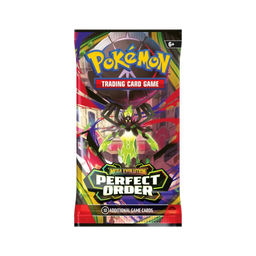
Pokemon TCG Decks: How to Choose the Ideal Deck to Play, Upgrade, and Collect
Pokemon TCG Decks: A guide to choosing the best deck, improving your strategy, and collecting wisely
If you're looking for Pokémon TCG decks to play more consistently, compete better in your local league, or start a meaningful collection, choosing the right deck makes a huge difference. A good deck isn't just about powerful cards: synergy, energy curve, consistent card draw, and how you respond to the metagame all matter. In this guide, you'll find a clear and practical way to choose Pokémon TCG decks based on your play style, budget, and goals as a player or collector. And if you want to take the next step, you can find Pokémon and other TCG products at tcgshops.com, and stay up-to-date on availability through their newsletter.
Why choosing the right Pokemon TCG deck matters more than it seems
In the Pokémon TCG, a solid deck ensures your best cards appear at the right time. The difference between a casual and a competitive deck often lies in details like the consistency of your search engine, the balance between attackers and support cards, and your ability to recover from a poor start. Choosing wisely also prevents impulsive purchases: instead of acquiring many random cards aimlessly, you build a reusable foundation for multiple archetypes.
Types of popular Pokemon TCG decks and what they offer
When searching for Pokémon TCG decks, you'll usually come across several styles. Understanding them helps you narrow down your options and find the one that suits you.
Aggressive decks
They aim to attack quickly, applying pressure from turn one or two and closing out the game before their opponent can stabilize. They typically use low-energy attackers and fast card draws. They're ideal if you enjoy a fast-paced game and forcing your opponent into mistakes.
Control decks
They focus on limiting the opponent's resources, disrupting their game plan, and winning through accumulated advantage. They may include tools for interrupting, punishing the bench, or controlling the tempo. They require more experience but are very rewarding for methodical players.
Combo decks
They set up a win condition or an explosive turn with a specific sequence of cards. Their strength lies in their power ceiling, but they rely on consistency and practice to reliably execute the plan.
Balanced decks
They combine pressure and responsiveness. They typically include flexible attackers, a strong support line, and options to adapt to different opponents. They're an excellent choice if you want a deck that performs well in many situations.
What to check before buying or building a deck
Before choosing a product or list, review these aspects. They are the ones that most influence actual performance on the table.
Consistency
A consistent deck is one that does the same thing in almost every game: establish your main attacker, accelerate energy if applicable, and maintain resource flow. Look for decks with a good proportion of search, draw, and recursion cards. If the deck relies on a single card and has no replacements, it's usually unstable.
Clear starting plan
The deck must answer two questions: how does it win, and how does it achieve that win condition? For example, some decks win through constant prize pressure, others through a scaling attacker, and still others by blocking the opponent's lanes. If the strategy isn't clear, the deck will be difficult to pilot or will become directionless at the first stumble.
Energy curve and attack costs
Many new players get stuck due to too many or too few energy cards. A good deck balances energy with your strategy. If your attacker needs a lot of energy, you'll need acceleration or recovery cards; if they attack with little, you can afford a lighter base to include more consistency cards.
Reusable cards for other decks
If you also collect cards, it's wise to prioritize pieces that can be played in multiple archetypes. This way, even if the meta changes, your investment will still have value. Furthermore, building a functional collection makes it easier to switch between decks without starting from scratch.
Pre-built decks vs decks built from scratch
Preconstructed decks are a very convenient entry point: they provide a ready-to-play structure, help you learn playstyles, and usually include useful cards. However, they aren't always fully optimized. To compete, it's common to make improvements with specific cards, adjusting ratios and adding key pieces for consistency.
Building from scratch allows you to optimize each card, but it requires more research and testing. The most efficient route for many players is to start with a preconstructed or archetype-based deck and evolve it with gradual upgrades. If you're looking for Pokémon TCG decks to grow as a player, this progression is often the most satisfying and profitable.
Quick tips to improve your performance with any deck
- Practice the initial turn sequence: your goal is to stabilize before turn two or three.
- Learn your winning conditions and when to change your plan if your opponent blocks you.
- Adjust your list after playing: change a few cards at a time to gauge the impact.
- Take care of your bench: in Pokémon TCG, what you put on your bench also decides games.
- Think about matchups: a very strong deck may have a common weakness; prepare answers.
Find your next Pokemon TCG decks at tcgshops.com
Choosing between Pokémon TCG decks is easier when you have a clear idea of your playstyle, budget, and the type of experience you want at the table. Whether you're looking for a fast-paced deck for dynamic matches, a control strategy with deep decision-making, or a balanced all-rounder, the key is consistency and practice.
To stay up-to-date on products and availability, visit tcgshops.com and subscribe to our newsletter to be notified when your next decks and accessories are available for purchase. With the right deck, every game becomes an opportunity to learn, improve, and enjoy the game even more.