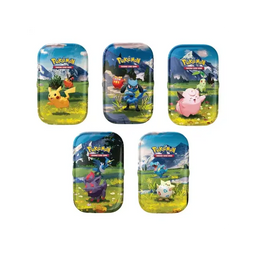
Pokemon card rarity: A complete guide to understanding rarities, holographic and special cards
Introduction: Why understanding Pokemon card rarity changes the way you collect
If you've ever opened a pack and wondered why some cards shine brighter than others, why some are so rare, or why certain versions are worth so much more, the answer usually lies in a key concept: Pokémon card rarity. Understanding it not only helps you make better decisions when buying sealed products or single cards, but it also enhances your experience as a player and collector, because it allows you to identify what's common, what's hard to find, and what's worth protecting from day one.
At tcgshops.com we focus on bringing TCG products to players and collectors, including Pokemon, and this guide is designed to help you find the type of card you're looking for with greater confidence, whether it's for your competitive deck or your collection binder.
Key characteristics of rarity in Pokemon cards
The rarity of Pokémon cards is primarily determined by two elements: the rarity symbol at the bottom of the card and the type of finish or visual treatment. These details help you quickly classify what you have in your hand.
- Common: usually carries a simple symbol and appears frequently on envelopes.
- Uncommon: found less frequently than common ones and often includes support Pokémon or Pokémon useful for playing.
- Rare: This is usually the basic "prize" in the pack and may include more outstanding cards for collecting or building decks.
- Special versions: include holographic finishes, alternative artwork and ultra rarity cards, designed for collectors and those who enjoy the "chase".
Besides the symbol, the finish matters: there are matte cards, holographic cards, cards with special patterns, and cards with artwork that covers almost the entire card. These differences mean that two cards of the same Pokémon can have very different values and demand.
Key details: types of rarity and how to identify them
While each era of the game may introduce new categories, there's a core set that remains consistent. Generally speaking, when you open Pokémon products, you'll find a mix of common, uncommon, and rare cards, and hopefully a special version or two. Here's a practical way to understand it.
Common and uncommon: the basis for playing and completing sets
Common and uncommon cards are usually the ones you see most often. For players, this is great: they allow you to get evolution lines, trainers, and support cards without relying on a single draw. For collectors, they're essential for completing sets and keeping your collection organized.
Helpful tip: Even though they're common, some cards become popular due to their competitive utility or because they're part of specific strategies. Don't underestimate these rarities if you play in tournaments.
Rare and holographic: the ideal middle ground
Rare cards often represent the level where a collection begins to truly shine. They frequently include holographic versions or variants that feel special without reaching the extreme of the rarest cards. For many collectors, this level is perfect: it feels exclusive, yet remains achievable for completing a set without becoming an impossible mission.
If you're looking to improve your deck, you'll often find interesting attackers or cards with game-changing abilities here. If your goal is collecting, these rares usually look great in your binder.
Ultra rare and special artwork: the cards everyone wants to open
When discussing the most exciting aspects of Pokémon card rarity, one typically thinks of ultra-rare cards, alternate art, and premium versions. These cards stand out for their detailed illustrations, textures, special shine, and overall high-quality appearance.
These are the most sought-after by collectors because they combine low frequency of appearance with high demand. They are also the ones we most recommend protecting with quality sleeves and, if your plan is to preserve them long-term, storing them under appropriate conditions.
How to choose products based on the rarity you are looking for
Understanding rarity helps you choose what to buy more effectively. If your goal is to build decks, sealed products are a reliable way to acquire card bases and, incidentally, have the chance to open a rare card. If your goal is to complete a set or obtain a specific card, it's often more efficient to buy the single card.
At tcgshops.com you'll find products designed for both players and collectors, with options for opening booster packs and expanding your collection. If you're following a particular set, it's a good idea to define your goal: completing card sets, acquiring alternate artwork, or searching for specific cards for a deck.
Quick tips for players and collectors
- Check the rarity symbol and finish as soon as you open the pack; it will help you separate cards for playing, trading, and protecting.
- Immediately protect the special cards with sleeves and place them in a binder or toploader.
- If you collect, keep track by set number to know what you're missing and avoid duplicate purchases.
- If you play, don't focus only on the rare: many common and uncommon cards are essential in competitive decks.
Conclusion: Collect and play better by understanding the rarity of Pokemon cards
Mastering Pokémon card rarity gives you a distinct advantage: you enjoy each opening more, quickly identify valuable cards for your collection, and make better purchasing decisions. Whether you're looking to complete a set, acquire that special card for your display case, or build a solid deck, understanding rarity brings you closer to your goal.
If you want to stay up to date with upcoming releases and availability, check out tcgshops.com and subscribe to our newsletter to find out when Pokemon products are ready to buy.